As a design consultant at EPAM Systems, I led user experience and product design across four global enterprise clients in four distinct industries. I turned ambiguous briefs into shipped digital experiences — sharpening my ability to learn new domains fast, facilitate workshops with senior stakeholders, and scale a design process that worked whether the user was a luxury shopper, a warehouse operator, a pharma technician, or a private wealth banker.
Consulting sharpens a specific muscle: the ability to walk into a new domain, absorb it quickly, and translate fuzzy business problems into concrete design decisions. Here's the scope of what I shipped at EPAM.
Each engagement demanded a different design vocabulary — from luxury retail aesthetics to shop-floor utility, from wealth advisory tools to global shipping platforms. Across all four, I was the design voice at the table.
A snapshot of the problem space, my role, and what shipped — across four very different enterprise contexts.
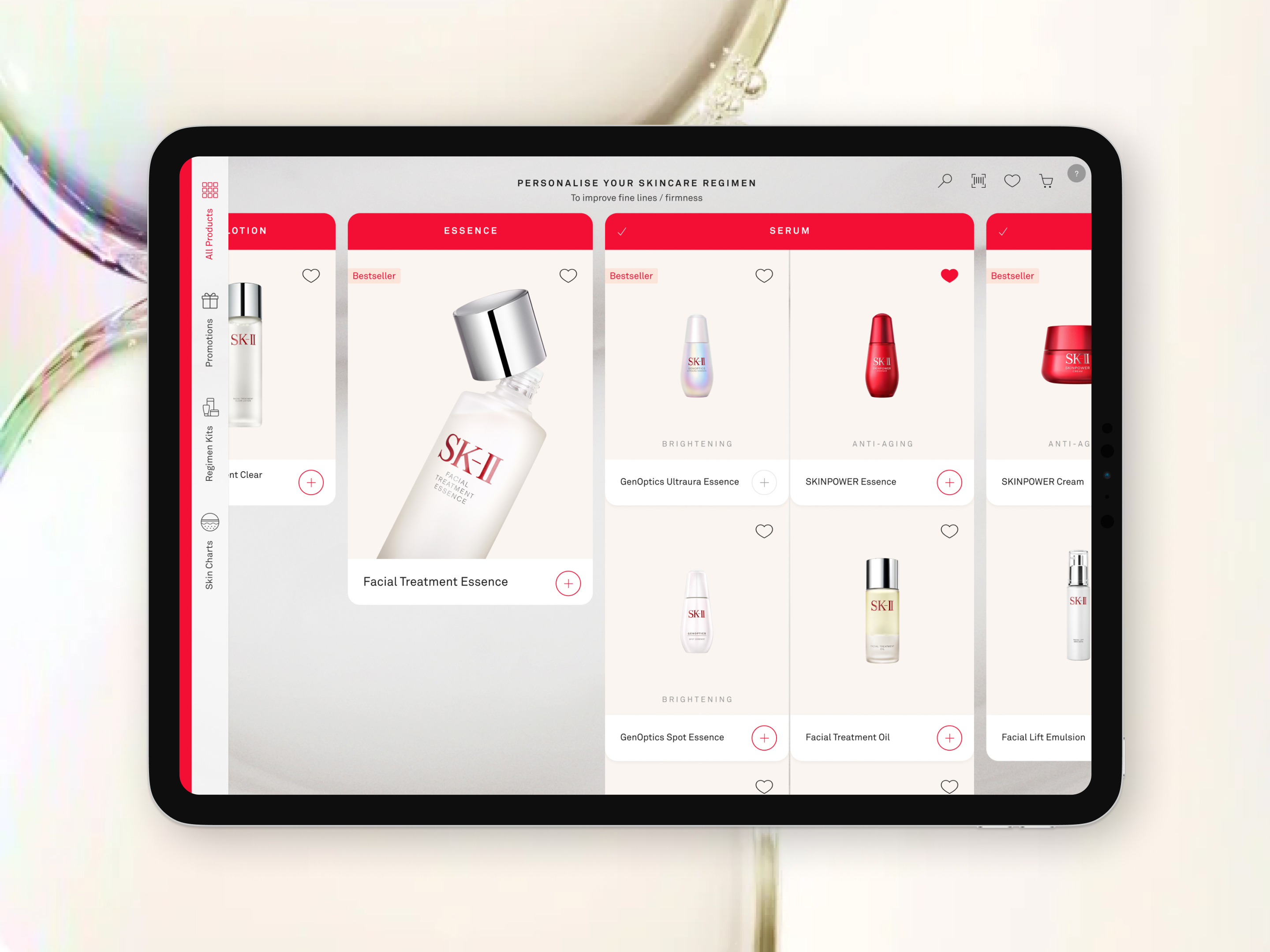
Reimagined the in-counter and digital shopping experience for SK-II — bridging beauty advisor tablet tools with the consumer mobile journey so that luxury clients received a consistent, high-touch experience whether they were in a department store, a flagship boutique, or shopping online.
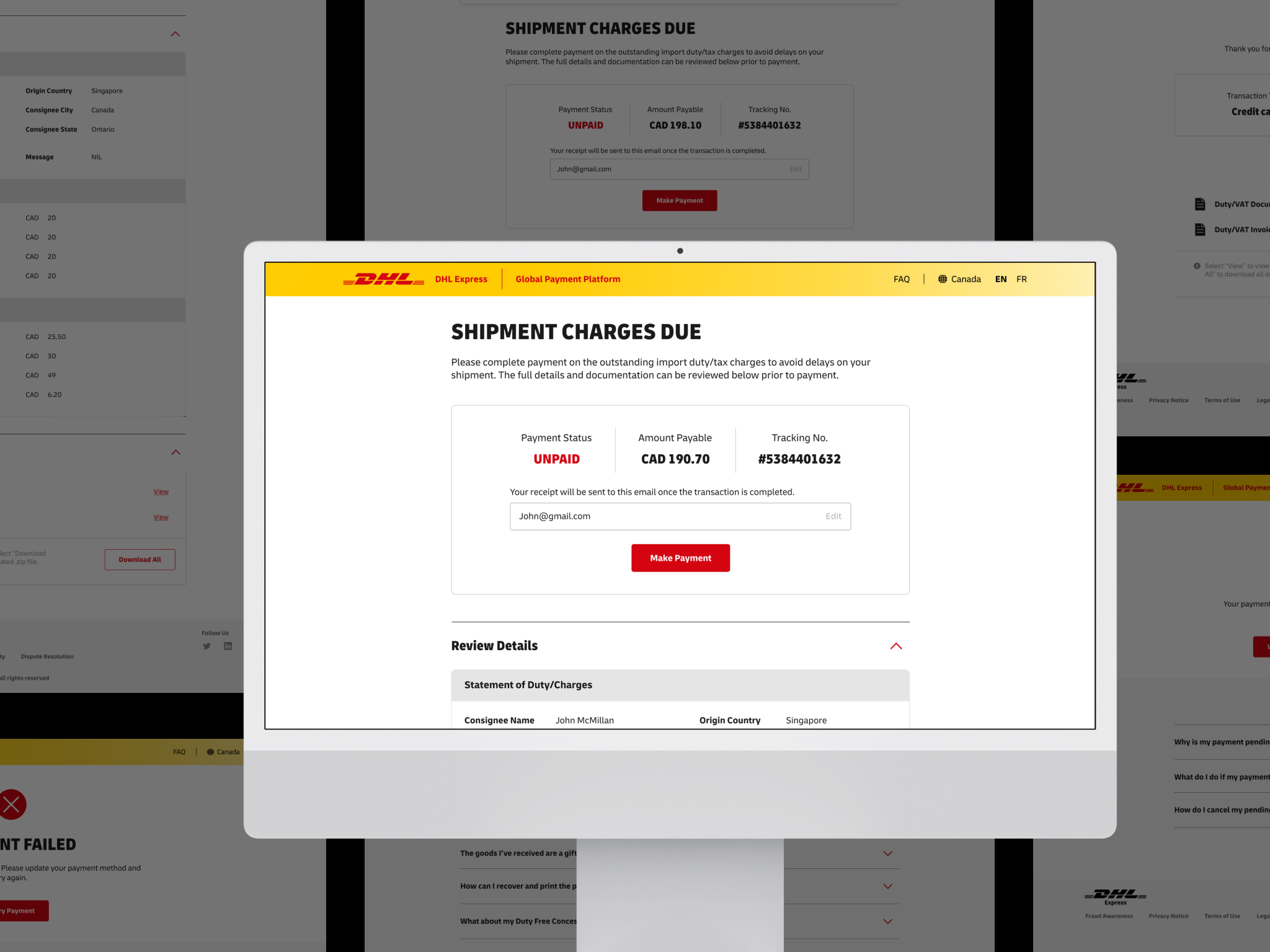
Embedded on DHL's eCommerce Experience (ECE) team as part of a consistent design approach across diverse project streams. Shipped Digital Account Opening, an On-Demand Delivery web app, and an Advanced Duty Charges global payment platform — applying a unified UX methodology across very different product surfaces.
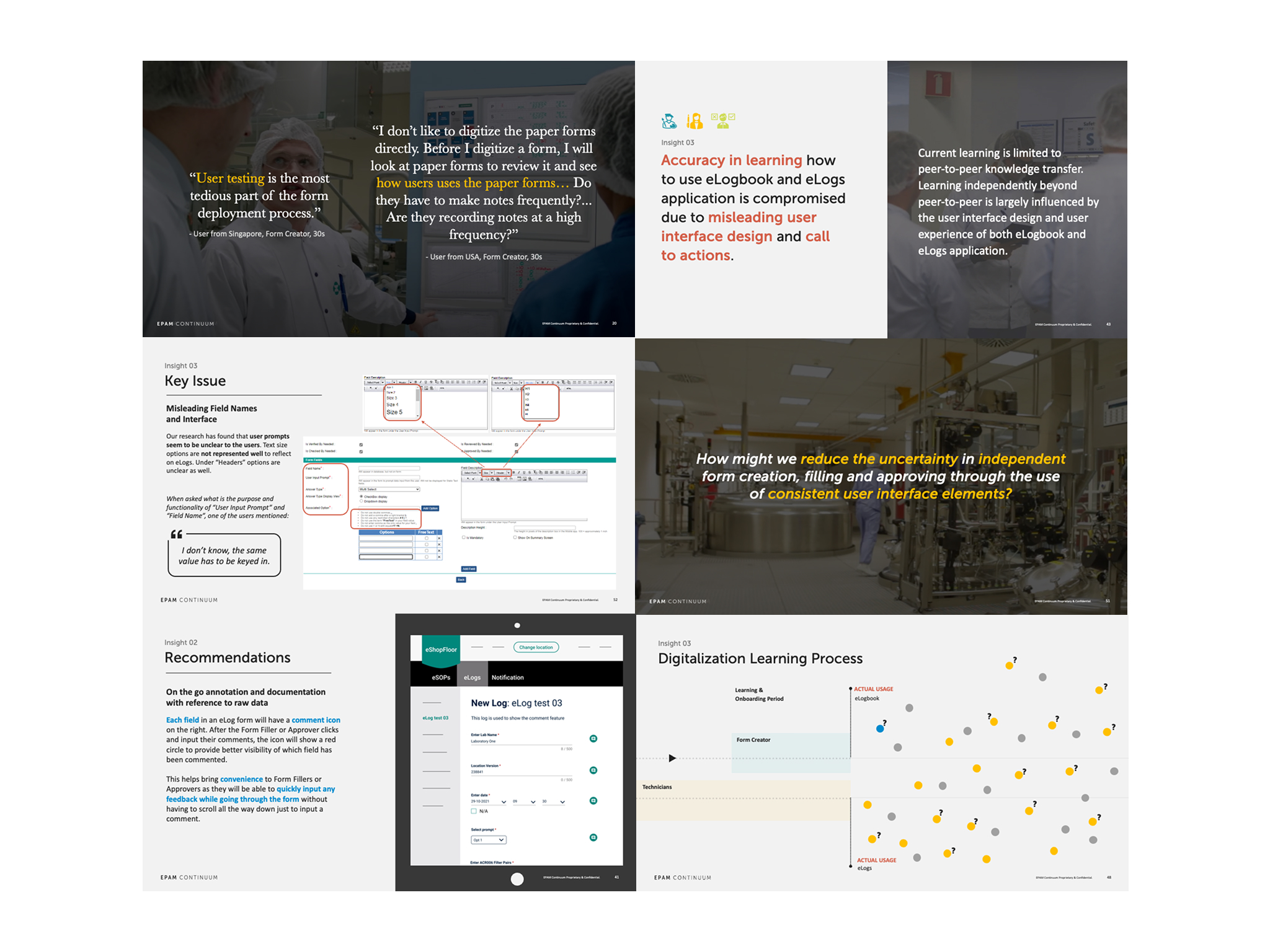
Led the in-depth UX research study that addressed the critical transition from paper to digital documentation on MSD's highly regulated manufacturing shop floors. Conducted on-site observation, stakeholder expert consultations, and synthesis — producing a strong foundation for the design of process, documentation, and training experiences going forward.
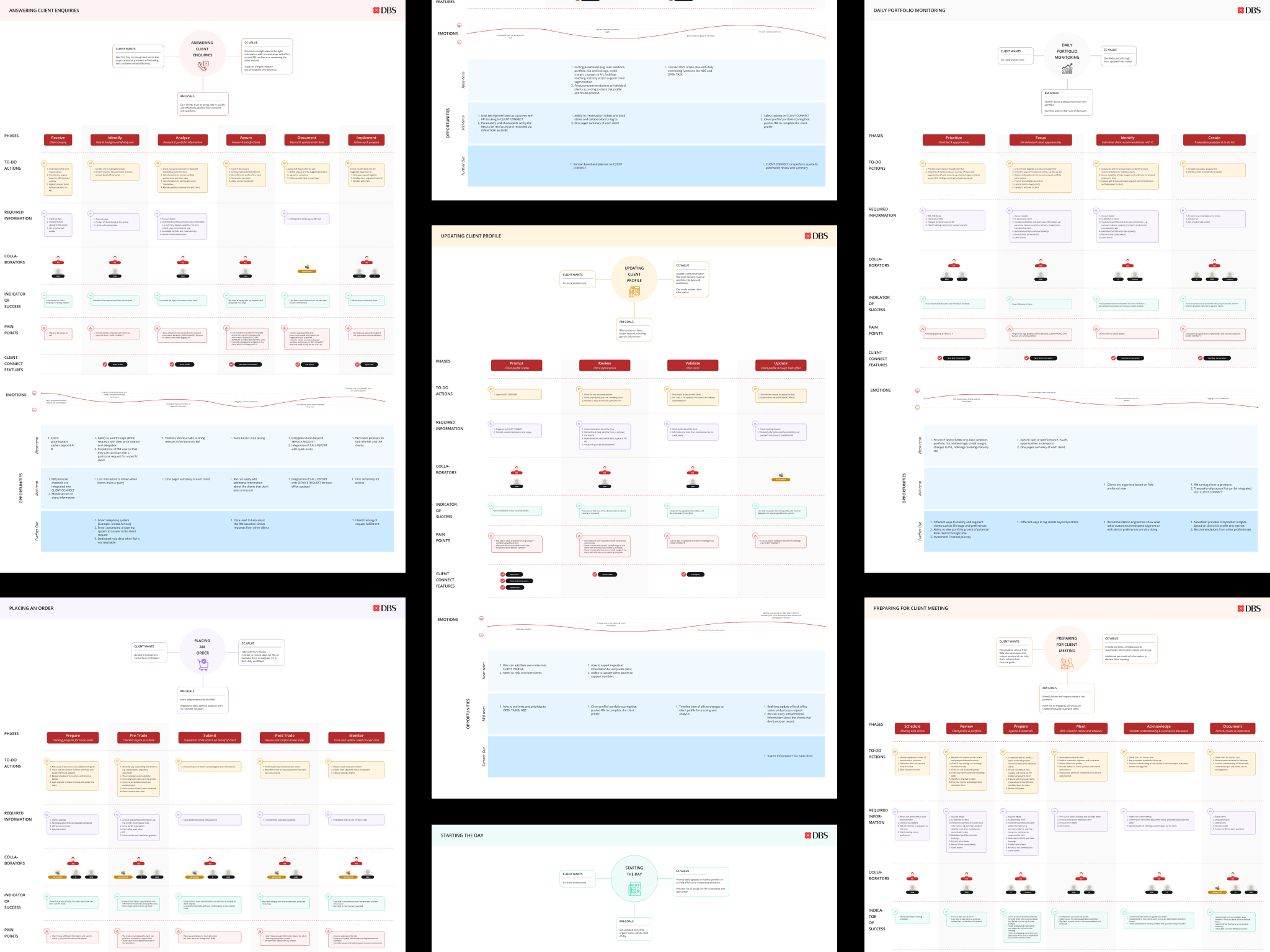
Partnered with DBS's private banking teams to design better tools for Relationship Managers and Assistant RMs — the people at the personal center of the wealth offering. Ran workshops, mapped 7 end-to-end user journeys, and delivered a strategic deck and roadmap that reshaped how their internal Client Connect platform was positioned and prioritized.
Whether the brief was luxury retail, enterprise shipping, pharma research, or banking strategy, the underlying UX methodology stayed the same — and that's what made it scalable.
Conduct competitive audits, stakeholder interviews, and domain immersion. Identify the real question behind the brief before committing to direction.
Run field studies, observe users in context, and synthesize qualitative and quantitative signals into a prioritized opportunity map.
Move from wireframes to hi-fi, loop with engineering early, and validate critical flows through moderated and unmoderated testing.
Stay engaged through implementation — pairing with engineers, reviewing builds, and making real-time calls to protect the user experience at ship.
Consulting across very different domains compressed years of product exposure into three. The patterns that held across all four clients are the ones I carry forward into every product I design today.
Clients rarely ask for what they actually need. The first job is to sit with the ambiguity, identify the real problem, and rewrite the brief into something a team can actually ship against — without losing stakeholder buy-in.
Luxury retail, pharma manufacturing, global shipping, private banking — each required becoming fluent in the domain's language, constraints, and culture within weeks. Depth beats surface polish when enterprise decisions are on the line.
Enterprise design is never just about a screen. It's about the Relationship Manager AND their client, the beauty advisor AND the shopper, the operator AND the regulator. I learned to design for both sides of every interaction.
The consulting lens shaped how I think about product design today — with sharper strategic framing, faster domain learning, and stronger conviction about what actually ships versus what stays in the deck.
Designing across beauty, logistics, pharma, and finance forced me to zoom out. The work isn't the screen — it's the end-to-end journey, the stakeholder ecosystem, and the trade-offs you make at each step. That systems lens is what I bring to fintech at TikTok now.
Running 20+ cross-functional workshops with senior enterprise stakeholders taught me that the best design decisions come from shared understanding, not from solo brilliance. Facilitation is now one of my most relied-on tools.
Four industries in three years trained me to go from zero to useful in a new domain quickly — reading fast, asking better questions, and finding the pattern beneath the jargon. It's the skill I rely on every time I open a new problem space.
Consulting taught me that strategy without user evidence is just opinion, and evidence without strategy is just data. I design at the intersection — where rigorous research meets clear product conviction.